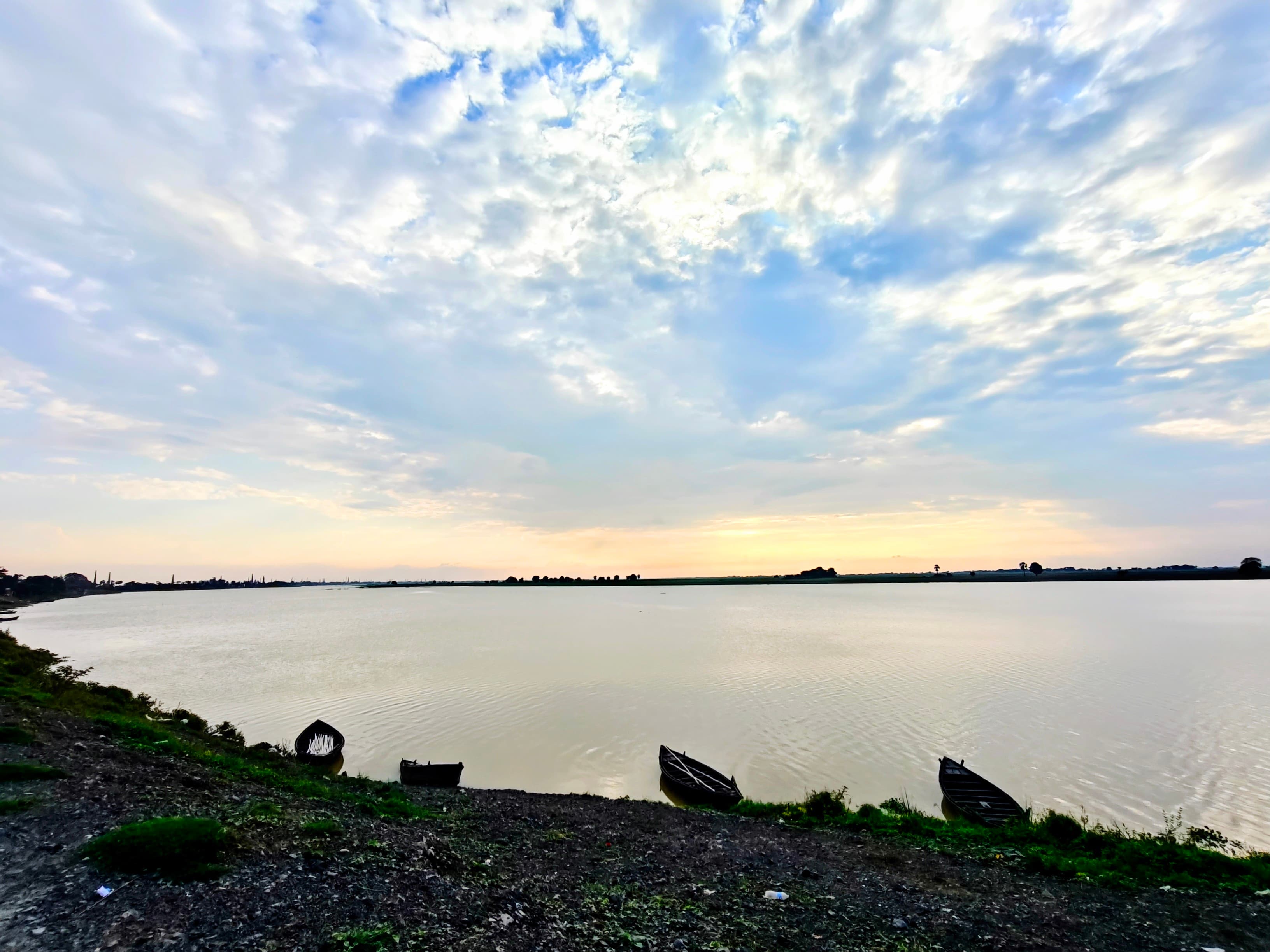
River Ganges along the Kaliprasad village
Om Prakash Singh seems to have resigned to the fate of his village. His resignation comes from years of collective suffering in Kaliprasad village, less than seven kilometres from the banks of river Ganges, off national highway (NH)-33, crossing the ruins of once flourishing Vikramshila University–the major learning site for Buddhism during the eighth century alongside Nalanda–in Pirpainti block of Bhagalpur district.
There have been multiple cases of cancer, which has been linked to ground water arsenic contamination. Four years ago he lost his brother Abhay Singh, then 67, of gallbladder cancer. Om Prakash Singh can count on his fingers the number of cancer victims. The cases are unusual because these cancers are linked with groundwater arsenic contamination. A link which is scientifically hard to pinpoint.
For years the residents have consumed ground water without any fear until researchers brought their attention to the harmful effects of the arsenic in ground water and its prolonged exposure leading to cancers. A water treatment plant along with a piped water supply was installed four years ago, however, “many villagers” say they don’t drink the tap water. They still drink water from handpumps and buy 20-litre water jars from a private source.
On a weekday afternoon loudspeakers are blaring devotional songs, when I reach outside Om Prakash Singh’s residence. He meets me under a shed and we start talking about the village’s socio economic profile–Singh being an upper caste Rajput, while majority of the villagers were from Kharwar–Schedule Tribe–caste. The village is part of Shrimatpur Huzurnagar Panchayat, which has a population of 10,000-11,000 residents, part of Pirpainti block in Bhagalpur district of Bihar. Other Backward Castes dominate the populace along with Schedule Tribe.
He is wearing a vest, and a wraparound–a common village attire–and he seems to be reluctant in the problems of ground water arsenic contamination in the village. The previous night I had inquired if he would be available for a brief chat, and reluctantly he had agreed. He calculates 50 cancer deaths, and counts it on his fingertips, but stops by six.
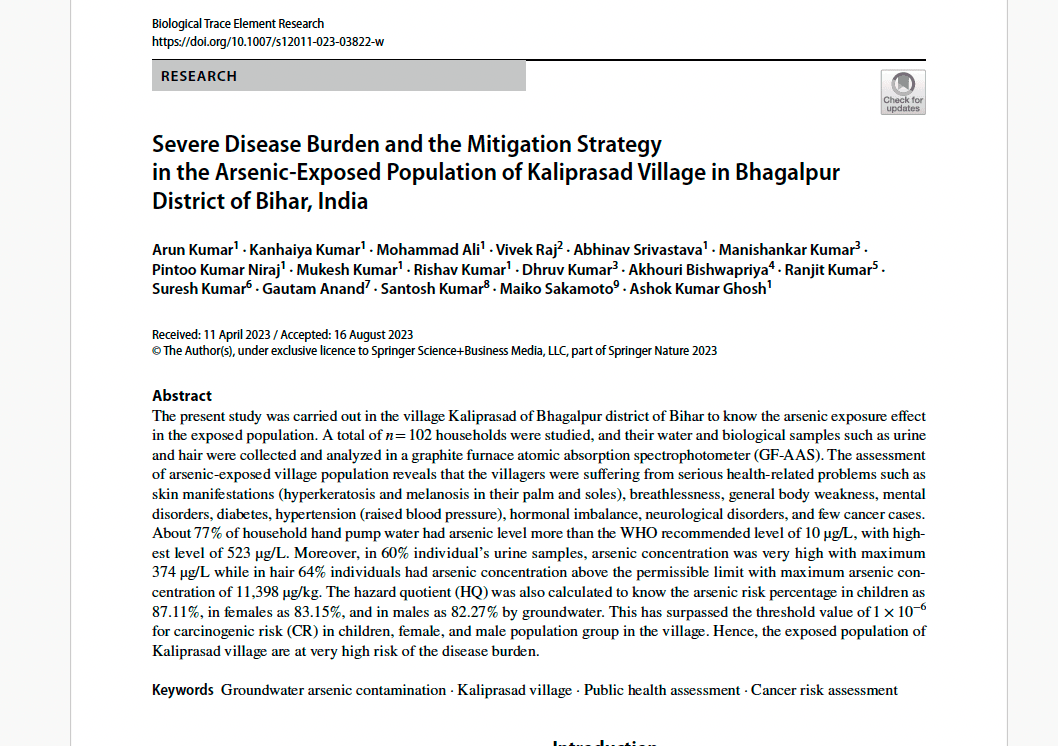
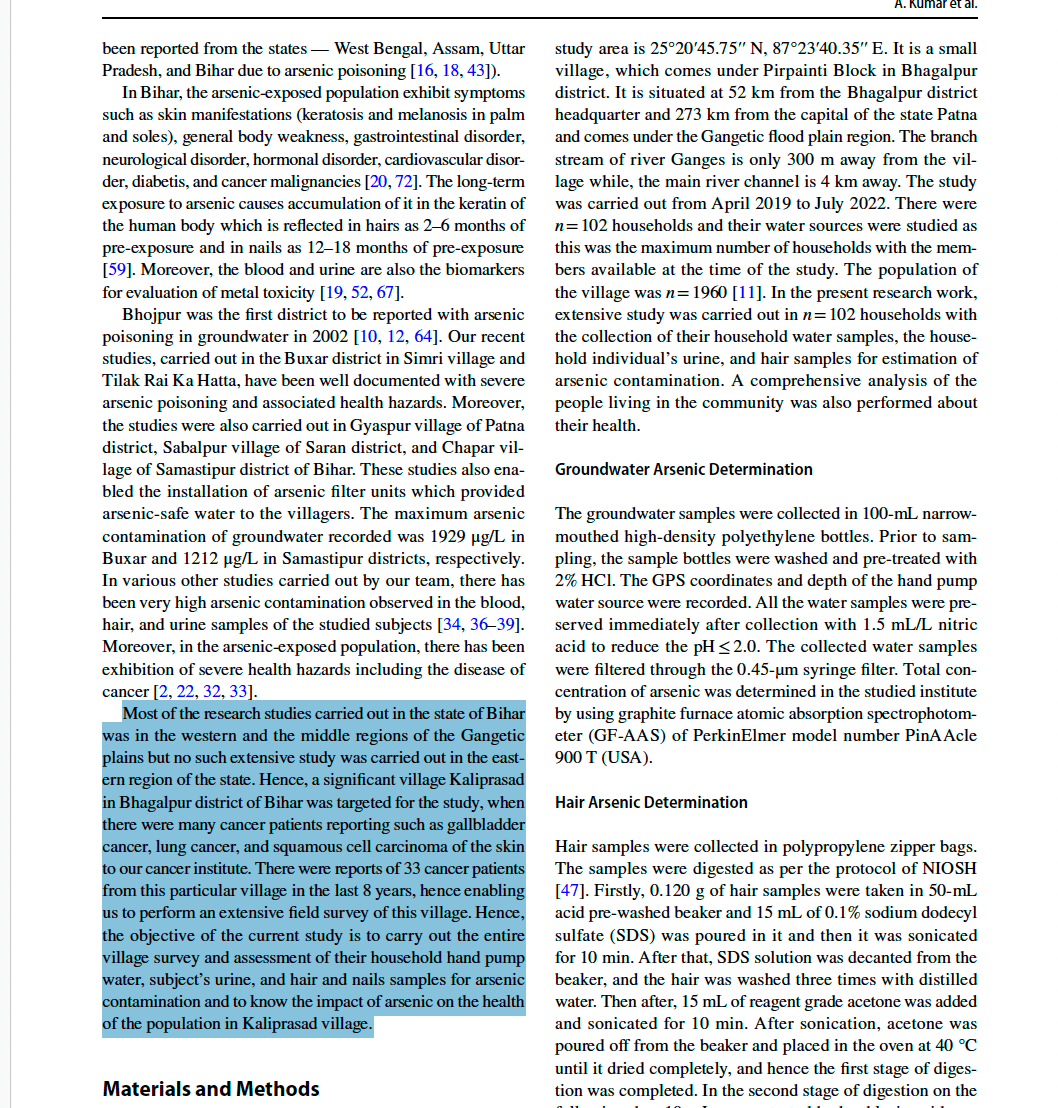
33 cancer cases diagnosed from 2015 to 2023, two are alive
In reality the numbers are less, but not far. A research by Mahavir Cancer Sansthan and Research Centre stated that 33 deaths happened between 2015 and 2023. A survey was conducted in 102 households with 1372 members. Water from handpumps, blood, urine, hair samples were collected. And the results were telling: more than three-fourth of the households had arsenic in their water beyond the permissible limit of 10 microgram per litre, with readings upto 523 microgram per litre. Similar readings were measured in urine of the three-fifths, and of the two-thirds in hair.
Head of the Research at Mahavir and environmentalist Ashok Ghosh, and Scientist Arun Kumar et al wrote in 2023 in a peer reviewed journal Springer: “20 percent had keratosis in palm and sole, close to thirty percent had Anemia, and 33 people had cancers. The high concentration of arsenic in groundwater, urine, and hair could lead to cancer incidences in the future, which is a serious matter of concern.” Villagers were at “very high risk” of disease burden, the study adds.
Arun Kumar later told the Reporters Desk on phone that people seem to have also ignored health seeking behaviour.
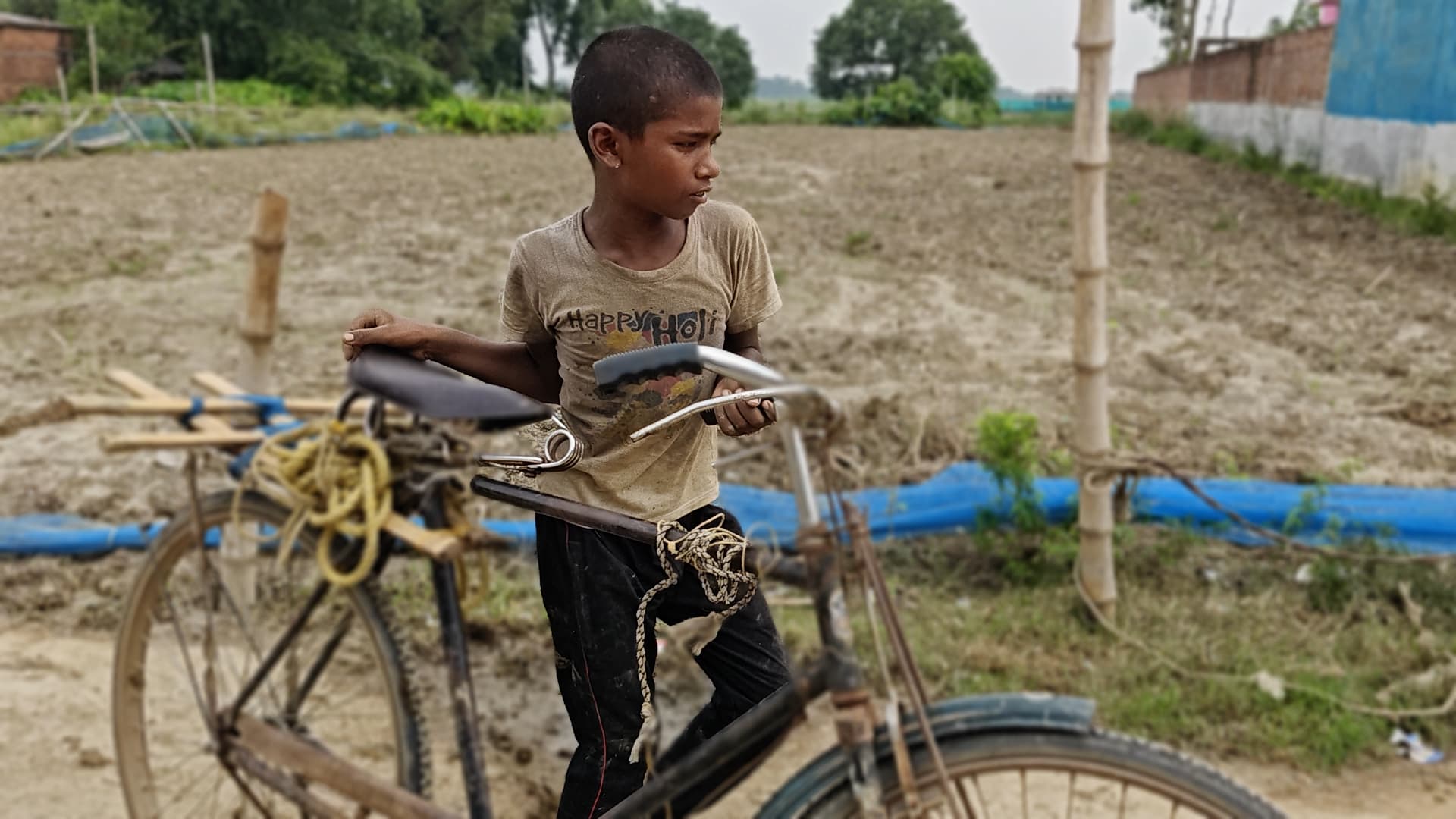
At Kaliprasad. The alluvium soil is fertile, but does it also have arsenic?
Om Prakash Singh recalled the scientist Kumar’s visit to the village followed by the installation of a water treatment plant and piped water supply to every household. His stained teeth are visible, he attributes it to drinking arsenic-induced ground water. He denied using tobacco. When asked if the problem of drinking water is now resolved, he says: “Continuous supply of water is still a problem, there seems to be a problem with the taste of water. Paani maveshi peete hain (Our cattle drink that water).”
Singh lost another relative to cancer, and asked if in retrospect the relative was affected by arsenic. Samdatt Singh, 40, also a farmer and the son of Abhay Singh–Om Prakash Singh’s cousin who passed away– says: “I was in my mother’s womb when my grandmother passed away in the 1980s, and of cancer.” When asked if his grandmother died of cancer, he said: “Maybe, but I don’t know.”
Om Prakash cuts across and says that it is only now that there are water treatment plants, however, earlier, people drank ground and surface water without any filters–for generations. He takes me to the filtration unit under the overhead tank room. The room is damp, cleaned, and two cylindrical units–the arsenic sand filters–were not in use. He says: “The filter installed is not RO (reverse osmosis), and the current one is not in use generally.”
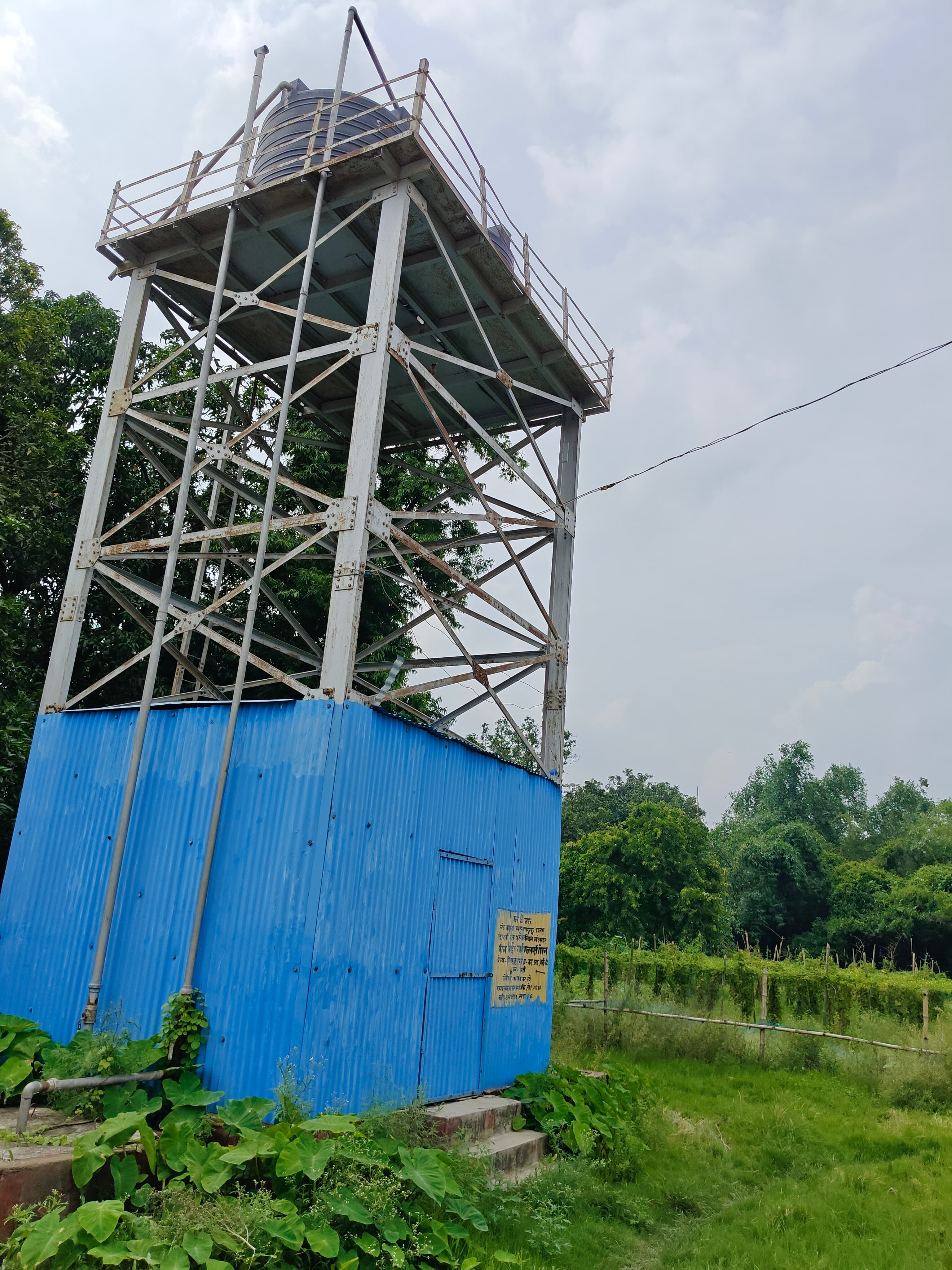
Overhead water tank, and the arsenic filtration unit in the asbestos room
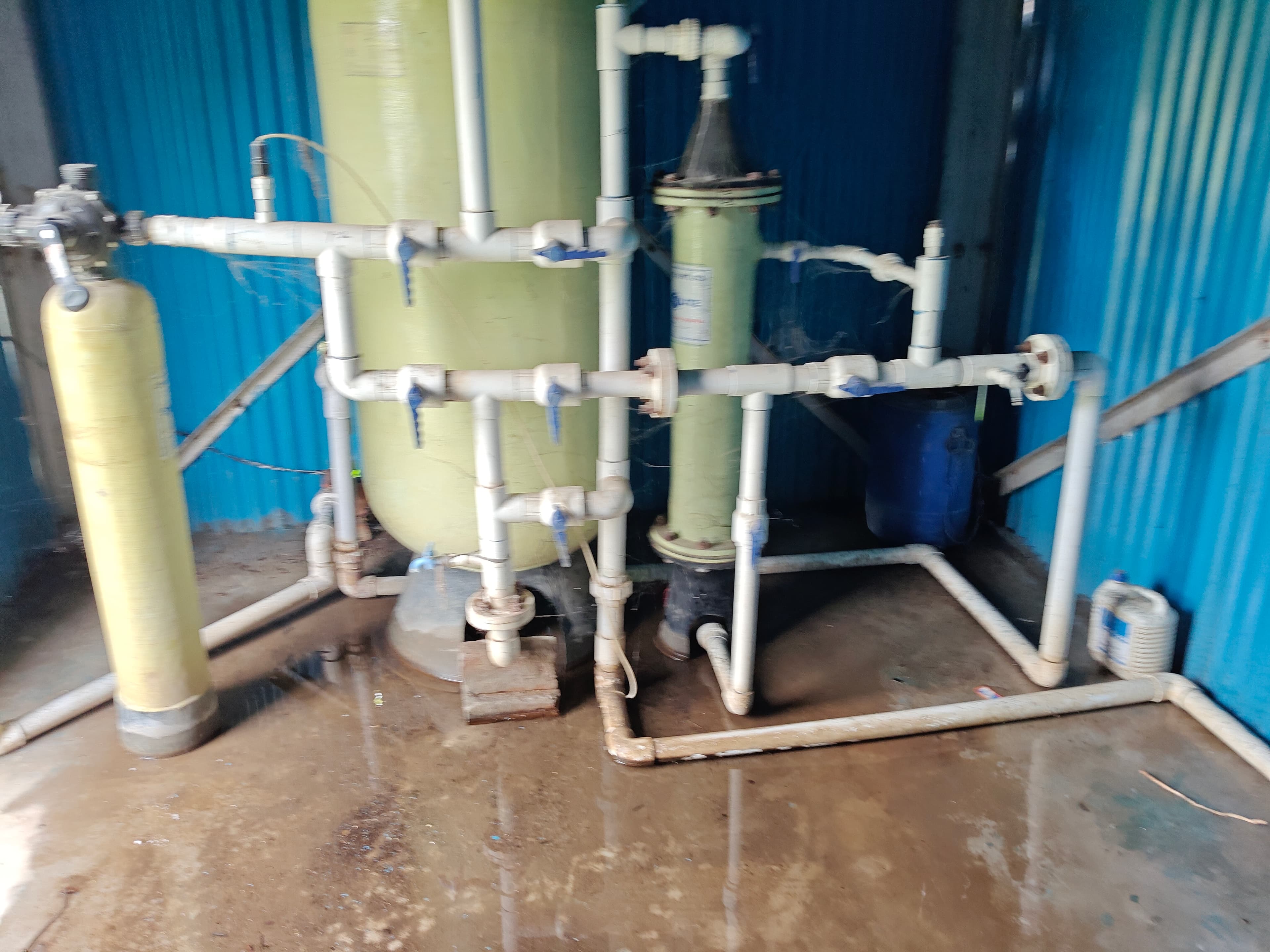
The filtration unit
When asked why the villagers have not demanded clean water supply, Om Prakash adds: “Aap chintit hain, lekin hum hain kya (You are worried for me, am I)”, he answers figuratively, saying that demanding clean water supply is taxing for the farmers, daily wagers.
In this part of South Bihar, an eastern-Indian state, the crisis took long before it started surfacing to the scientific community. As more and more cases of melanosis, keratosis, arsenicosis–stages of prolonged arsenic exposure–are correlated to cancers, the search is on to look for causation.
In its natural form, the mineral Arsenopyrite is found in the Himalayas. In its course, the river Ganges brings the mineral to Bihar–the river cuts across the state from west to the east–as silts, and gets deposited in the floodplains or river bed as silts, and leaches to the groundwater over time. According to the World Health Organisation, inorganic arsenic is a confirmed carcinogen. However, the pathways to pinpoint causality between drinking arsenic water to isolated cancer patients in Bihar is yet to be proved on a case to case basis.
Experts say that until the 70s, people in India drank surface water, however, it resulted in diarrhoea, cholera infections. So the government decided to dig wells, bore-wells, which “disturbed” the arsenic in its natural form, after which the mineral got oxidised and became water soluble, and as the populace slowly started drinking arsenic induced water.
As of now arsenic is present from shallow to middle aquifers i.e. from surface to 150 metres deep. The deep aquifers remain free, however, researchers argue on its longevity to remain contaminant free. So arsenic in groundwater is geogenic and anthropogenic.
The story starts in the year 2002 as per a survey in Bhojpur district, found to have the arsenic groundwater contaminant. Later, a 10-kilometres stretch bordering river Ganges, and more than 80,000 water sources spread over 65 blocks of 11 districts.
It found contaminated groundwater in 892 habitations, according to a 2023 consolidated geological survey of India and central groundwater report. In 2008, more than 50 blocks from 15 districts, then with 10 million population, were affected by arsenic groundwater contamination above 50 microgram per litre.
This is a brief history of Arsenic, and is currently present in groundwater of 27 out of 38 districts of Bihar. The solution of the contaminant is to provide a clean water supply scheme. An ambitious scheme was started in Bihar in 2016 to provide 70 litres of safe drinking water per capita per day (lpcd) in rural areas, and 135 lpcd in urban households–three years before the Centre launched Har Ghar ka Nal Jal (HGNJ). The state briefly remained part of the scheme and stopped taking any monetary help, and resumed later with Centre’s help and as per the parliamentary records. Nal Jal is an ambitious attempt, and many villagers are reaping benefits of it, but not in Kaliprasad, where the filtration machine sits turned off. When asked, he says: “A lot of maintenance is supposed to be done, water supply is not continuous…Filters get jammed sometimes.”
Former Sarpanch of Shrimatpur Huzurpur Panchayat Vipin Choudhary says: “The implementation of Nal Jal scheme in at least our panchayat, which has seven villages, has been around 50 percent. Many houses have been left out.”
As scientific research is increasing with more political and bureaucratic action, finding the cause of cancer due to arsenic has been difficult. Only recently have there been some impact studies on tracing the cancer patients’ water and food consumption history.
The entire Bihar sits on the central Indo-Gangetic plain and Bhagalpur is situated on the banks of river Ganges. The town has been linked with the kingdom of Anga and its capital Champa–the modern day Bhagalpur, as per the 1911 Bengal District Gazetteer by J Byrnes, then Indian Civil Servant. Currently, the district is divided into three sub-divisions, 16 administrative blocks, 242 panchayats, 1515 villages.
Bhagalpur is divided into East, and West blocks and more than one-fifth of the population is affected. In Bhagalpur West, Fluoride contamination is found in 234 wards–the lowest administrative unit of a panchayat–and arsenic in groundwater contamination is found in 148 wards. In Bhagalpur East 14 wards are affected with fluoride, and 279 wards are affected with arsenic. Kaliprasad village is part of Pirpainti block in Bhagalpur.
Rekha Devi’s house is 100 metres from Om Prakash Singh’s residence. Her husband Vilas Mandal died less than a year ago. She doesn't remember her husband’s death. “Ghaav ho gail chaile okra. Cancer ho gayil chaile. Doctor sini jawab dei dailke (He had boils and had cancer. The doctors had given up on him),” says Devi in Angika dialect. Asked if there were any medical records available, she brought a used prescription. “I have thrown most of the documents, what’s the use anyway,” she says.
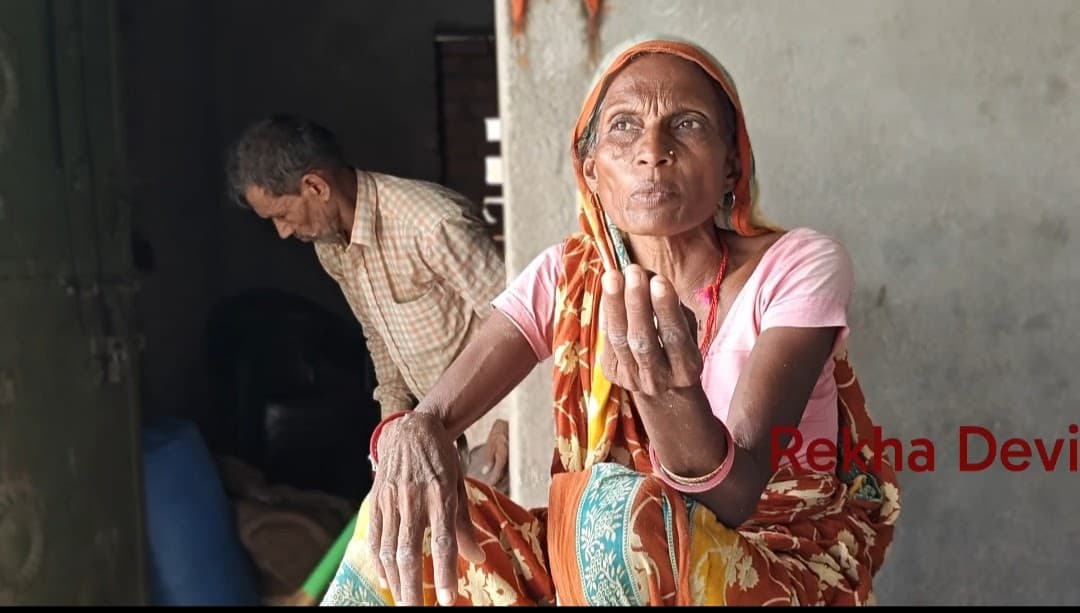
Rekha Devi explaining her ordeal
The prescription of physician RP Jaiswal stated his complaints as “itching whole body [since] four years. Swelling both legs, right hand. Eruptions (fungus) on the body.” Also mentioned “tobacco”, weight “47 kilogram”.
“We could not take him to a better hospital as we (lacked resources). We spent around 2 lakh rupees, and sold buffalo, and a few goats–and got Rs 50,000-Rs 60,000–and brought the rest of the money by Kamai Kodi ka (by digging trenches as a daily wager labourer). I told my son to keep the documents, but he threw all the documents away, burnt them,” she says.
“I also feared that I would die since I was of old age, that I also had only one son. He has gone to work whenever he gets the opportunity,” she adds. Asked if she knew that the groundwater was contaminated, she says: “We drink what we get from the handpump”.
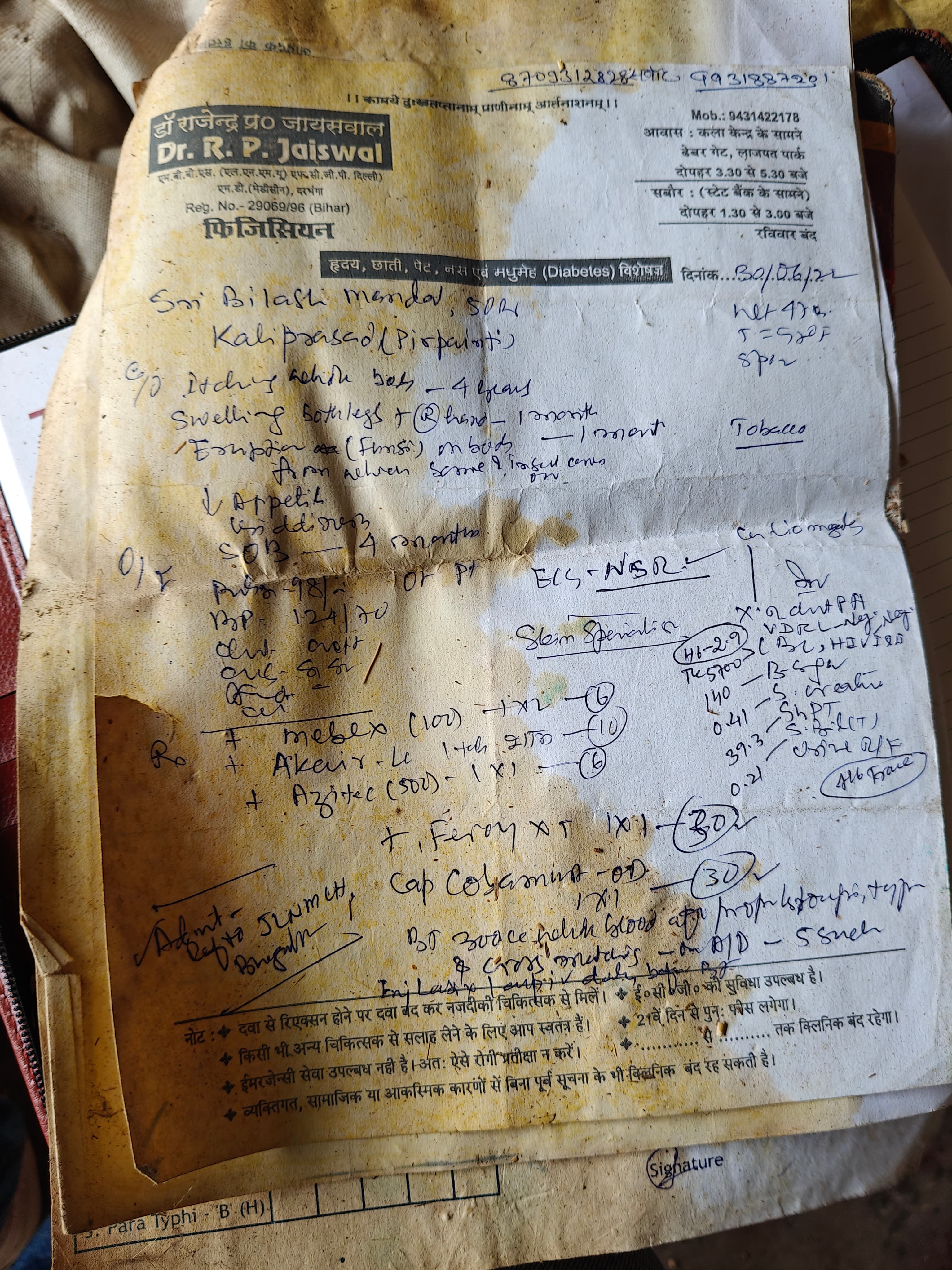
Itching, swelling in legs, eruptions (fungi)
Why this story deserves at length discussion
Arsenic in the groundwater has been linked to several deaths due to lack of clean drinking water supply–denial of basic and fundamental rights–and perpetuates inequality. According to the World Inequality Report, 2026 the top 10 percent of the global population–556 million or 55.6 crore people–share more than half of the total income. The bottom 50 percent–2.8 billion–income share is just 8 percent of the total global income. To bring a comparison, the top 0.01 percent population stands at 0.6 million, roughly the population size of Bhagalpur, and the income share is 4 percent of the total global income i.e. average income per adult in dollar terms is 11.4 million in 2025.
The cancer generation of Bihar: Groundwater arsenic contaminant and a scientific grey area, and the making of a vicious cycle
Research on Arsenic in the groundwater since 1960s
To understand the link of arsenic exposure and cancer, there are more than 11,000 scientific research papers, as per an open source AI database–OpenAlex–of research works. To put it in perspective, the oldest research work–read by this reporter–was published in 1968 by the Journal of the National Cancer Institute, Oxford University Press. According to the research conducted in Taiwan, a general survey of more than 40,000 residents was conducted. The overall prevalence rates for skin cancer, hyper pigmentation, and keratosis stood at 10.6, 183.5, 71 per 1000 population, respectively.
The latest research on groundwater and arsenic contamination is from Iran, published on Springer in 2026 August–which publishes peer reviewed scientific articles globally–of 50 samples–and found cadmium, lead, chromium within the WHO permissible limits, however, it was found beyond 10 microgram per litre, with a mean value of 14.6 microgram per litre.
Between 1968 and 2026–more than 58 plus years of scientific publishing–the problem of groundwater arsenic contaminants, and its use as drinking water has not yet been solved. Part of the problem is the lack of a consolidated platform for researchers, policy makers, social scientists and civil society groups to come together on one platform and exchange and implement ideas–along with continuous reporting on this topic, and a centralised repository in the hospitals, locally, nationally and globally.
Along with that an “epidemiological framework” set by UN bodies like World Health Organisations on investigating arsenic induced diseases, and linked cancer cases. Reporters Desk contacted WHO for comments, and despite several reminders no response was received.
In Bihar, there have been at least over a thousand scientific studies showing several links to consumption of groundwater laced with arsenic contaminants. To be sure, the scientific community has been unable to show the “causation so far” of cancer and arsenic.
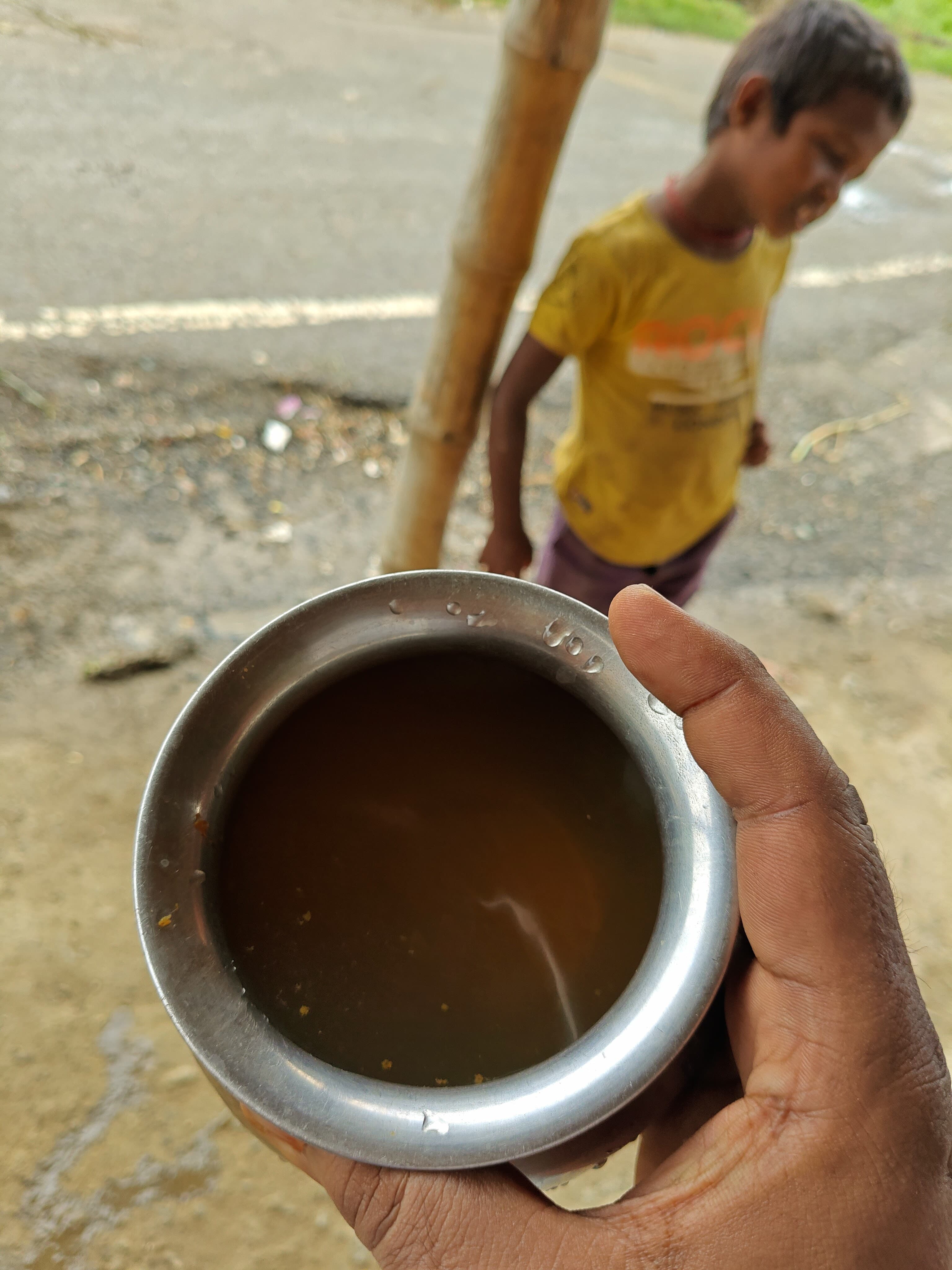
Water from hand-pump in Nayatola village in Pirpainti block of Bhagalpur district. No water filter yet. In October 2010, Central Ground Water Authority in a report to National Green Tribunal said that Bihar have had 4709 wards contaminated with ground water arsenic, in which 4684 had been covered and remaining 25 was supposed to be covered by removal plants as on July 2024.
Bhagalpur-based river biologist, dolphin expert and environmentalist Sunil Kumar spoke to Reporters Desk. He said that he along with his team has been working for a long time on groundwater contamination. He addressed six blocks of Bhagalpur are along the river Ganges, emphasised on the scientific community’s inability to establish causation of arsenic ground water contamination and cancer. Kumar said: “In the diara lands [floodplains] of Pirpainti, people are drinking water with poison [arsenic contaminated groundwater] without realising.” He added that he was also investigating whether surface water is also contaminated. He added: “From Champa Nala to Barari Bhagalpur we tested surface water, and we found arsenic beyond permissible limits at certain points. And the same water is being supplied to people and after filtering it.”
He, however, claimed: “We don't want to panic people, but it needs a robust study.”
To be sure, contaminant arsenic can be removed from filtration units, however, studies pointing out higher levels of arsenic removal is not yet shown.
The mothers who lactate arsenic in their breastmilk
Ghosh et al from Mahavir Cancer Sansthan studied mothers and their children from a cohort of 513 households. It was found–interestingly–more than 85 percent of households below the permissible limit of 10 micrograms per limit, with the highest being 732 micrograms per litre. Out of 205 women, 60 percent’s blood content had arsenic contamination in their blood above the permissible limit 10 microgram per litre.
In 210 women out of 378, or 55 percent, had their arsenic content in their breastmilk beyond permissible limit i.e. more than one microgram per litre–the highest being 458 micrograms per litre. In addition, 461 women’s urine were also tested, and it was found that close to 80 percent, or 369 women, had arsenic content more than 50 micrograms per litre–the highest was 1039 micrograms per litre.
“This denotes that the subjects [women and the infants] are at very high risk of cancer in future due to long term arsenic exposure,” the research paper co-authored by Arun Kumar and Ashok Ghosh et al noted. The paper adds that 124 infants tested out of 184, 70 percent, had arsenic content in their urine more than the permissible limit. The highest arsenic content in the urine was 1031 micrograms per litre.
Therefore, the researchers also studied wheat, rice samples in their households. The arsenic content study in rice samples was carried out in 369 households, out of which 50 households had arsenic content in their rice samples more than the permissible limit i.e. more than 200 micrograms per kilogram. The highest arsenic content in the rice was 821 micrograms per kilogram. Out of 279 households, 174 households had arsenic content in their wheat samples more than the permissible limit i.e. more than 100 microgram per kilogram. The highest arsenic content in the wheat sample was 775 micrograms per kilogram.
“This [intake of arsenic in their intake of their food samples] is the first finding ever reported in 11 districts of Bihar…The infants are at very high risk for the disease burden in the future as their mothers are lactating high arsenic content in their breast milk. This can lead to mental disorders, low intelligence, low memory in these infants,” the research stated.
What are the odds? One study says 72%
State Cancer Institute at Patna’s Indira Gandhi Institute of Medical Sciences (IGIMS) carried out a research on gall bladder carcinoma (CaGb) patients’ proximity to the river Ganges and in districts with high soil metal toxins arsenic content.A study by Richa Madhawi et al, currently additional Professor at the Department of Radiation Oncology at IGIMS, had published their work in 2018, after studying 1291 patients with GaCb across three years, January 2014 to December 2016.
The paper adds that the odds ratio of population living along the Ganges main river, and in districts with high arsenic soil content stood at 1.72, and 1.45 respectively, when compared with 2011census population data with exposed and non-exposed people. In epidemiological terms with respect to this case, the odds ratio means the odds of getting ill with cancer when exposed to and when not exposed to arsenic i.e. the ratio of people exposed to arsenic living along the Ganges main river, and in the districts with arsenic contaminated soils have 72 percent and 45 percent higher odds, respectively, or contracting cancer than people not living along the ganges and in the districts with arsenic contaminated soil.
World's first study. But what would settle causation
In another research by the same group of people, a size of 2000 cancer confirmed patients were randomly selected from the year 2017 to 2019 from Buxar, Bhojpur, Vaishali, Samastipur, Bhagalpur, Purnia and Katihaar who had “very high exposure rate” with more than 100 microgram per litre of arsenic in their bodies. Out of 787 males, however, 387 had blood arsenic concentration of more than 10 microgram per litre, and 77 had the blood arsenic concentration in the range of 11-20 microgram per litre, with maximum at 2432 micrograms per litre. Among the females, 588 had blood arsenic concentration of more than 10 micrograms per litre and 102 were between 10-20 micrograms per litre.
The paper claimed: “The present comprehensive study carried out the world's first study which deciphers the association between arsenic and cancer through blood arsenic study…This denotes that there is some pathway, which makes the arsenic exposed population more vulnerable, which subsequently due to sustained exposure gets converted into a life-threatening disease like cancer. Secondly, the significant levels of arsenic concentration have a distinct correlation with the incidences of cancer patients.” It states that at first arsenic weakens the immune system aggravating the condition leading to cancers.
More systematic study is further required to understand the “molecular mechanisms of arsenic toxicity in incidences of cancer and its progression and to establish the correlation by deciphering the signalling pathways for arsenic-exposed human cancer”. The paper concluded that the formulation of health policies by the state government is necessary to “mitigate the risk of exacerbated health conditions in newborns who have been exposed to arsenic poisoning”.
It seems to be changing your DNA too!
The research published July 2026, Mahavir Cancer Sansthan studied nine women with high arsenic contamination in their blood, urine, breastmilk, and extracted their DNA through blood to “look for variation in the exome sequencing” the part of gene which contains the information on protein and is a marker of the onset of any disease.
When the results were studied, only two subjects showed a variant of “uncertain significance” in two women, however, the research paper says: “These findings emphasize the urgency of implementing targeted molecular screening and exposure mitigation efforts in arsenic-endemic areas, particularly for women, who may remain an overlooked high-risk group in environmental cancer research.
The key regulators of DNA repair and genomic stability provide preliminary observations suggesting a possible link between chronic arsenic exposure and alterations in the DNA repair pathways”. However, given the small sample size, the paper says that the findings should be interpreted cautiously and require validation in larger cohorts before any causal relationships can be established.
Bihar’s Cancer Registry and “housewives” with 90% cancers among females
Worldwide population and hospital based cancer registries collect data on cancer incidence to conduct analytical studies and formulate health policies. India has 38 population based cancer registries including one in Bihar, established in 2018 and run by Tata Memorial Centre, an autonomous body under the Department of Atomic Energy along with Krishna Medical College and Hospital, and Health Department, Government of Bihar. One of the objectives of the registry is to record the cancer incidence, mortality, demographic data, and understanding patterns.
The Muzaffarpur registry recorded 712 cancer cases in 2018, and in addition 423 cancer deaths. Out of 374 cases among women, 167 had no formal studies and were categorised as “illiterates”, who also had the largest share across gender and education. The number of “illiterates” and “college going” men stood at 161. Among men, farmers had a 30 percent share–106–among other professions. Among the females, home-makers or “housewives” had the largest share, accounting for 316 patients or 89.3 percent–in one district of Bihar.
It is important to note that among cancer incidence in men, 30 percent are farmers. Muzaffarpur PBCR covers five blocks: Motipur, Kanti, Musahari, Sakra, Muraul, and Muzaffarpur Municipal Corporation. For the year 2019-2021, the same cancer registry recorded 2165 incidence of cancer cases. In the same time period, 1641 cancer deaths were recorded which included 828 deaths or formed 50.5 percent.
Among men, farmers–as a profession–having cancer stood at 263 or made up 25.1, and among women 986 remained home-makers or “house-wives” at 88.3 percent. Moreover, cancer cases were more among persons without any formal education:472 out of 1117 among females, and 178 out of 1048 among males.
The studies made a very important observation, which resonated with the reporter’s findings in Bhagalpur i.e. cancer patients came from lowest socio economic background.
This study noted that the survival of cancer patients among this area are very poor. “Due to lack of health awareness, the majority of cancer patients [who came to them were at an advanced stage] of the disease. There are a lot of challenges in the completion of the treatment for cancer patients.” Importantly, more than 55 percent of cancer patients were in the bracket of income population i.e. Rs 7500 to 15,200 per month, the report says.
Multiple trips to private doctors for nine months to get the cancer detected
Her first pain flared last April: in her hands, shoulders, chest region–and had a cough. She had difficulty breathing, and lost her appetite. Days before they made multiple trips to get the diagnosis of the cause of growing illness, 41-year-old Sila Devi who worked as a ward member, was elected from Mansarpur Sidhari village of Hardeochak Panchayat in Pirpainti, Bhagalpur during local body elections. However, as with many elected women representatives in India at the local level, she too did not wield actual power in this part of rural India.
More than a year ago, she went to a private clinic in Bhagalpur town, where the doctor had conducted X-Ray. The family members say that the doctors diagnosed that a cough had accumulated near the lungs, and asked her to do certain exercises, and avoid any kind of smoke. In the next few days, without any relief, the family members went to another doctor near her residence.
In Pirpainti, 60 kilometers from Bhagalpur, she was taken to a local doctor. She maintained a similar complaint, and this time the doctor advised her of an ultrasound, and the report says fatty liver, and advised exercises along with certain medications. Without any relief the family claimed to have rushed to a private hospital in the neighbouring state. Without understanding the root cause, they left West Bengal.
As the problems exacerbated, she was rushed to another doctor in Bhagalpur, who in turn referred to another doctor–and this time it was a privately owned hospital in the town.
“My mother’s problem started in April last year, and every doctor we visited, we had to make 3-4 trips–and every time we went to the town, we rented a vehicle which cost us Rs 3000 per trip. It was in November that we got her admitted to the hospital, her condition had already deteriorated,” says her son Nitish Yadav.
In the next few days the problem did not stop, her family members took her to another doctor–this time it was a privately run hospital. In the first week of November, the family went to the doctor when it was diagnosed that she had water in her lungs–and then performed a procedure to extract the water out.
“I spent close to 3.5 lakh rupees for the day care treatments that the doctor made in Bhagalpur. He owned a hospital, and pericardial effusion was detected–building up of excess fluid in the sac around the heart–later after the water was out of the lungs, we went home hoping for some relief,” he says. However, after a few days her condition had deteriorated again, and the procedure was repeated.
However, after making at least seven trips without any relief, the family claimed to have confronted the medical staff and a CT scan was conducted with ‘lung mass metastasis’. “That is when the first time we got some hint that she had cancer,” husband Abhay Yadav says. In January the family admitted her to Patna’s Buddha Cancer Centre when chemotherapy began.
In April, the family became desperate, and knocked on the doors of an “ayurvedic physician”. Asked why they did not continue the therapy: “There was a time when my wife said it was enough–we were all very tired of the process,” Abhay recounts, adding that his wife passed away on June 6.
In the backdrop of arsenic contaminated groundwater, Abhay categorically feigned ignorance that groundwater had anything to do with cancer, pointing out to the new submersible 300-feet bore unit under Har Ghar ka Nal Jal scheme which supplies water to all residents of his ward. As mentioned above, arsenic contaminants are mainly found in shallow aquifers up to 100 feet deep. “I don’t think there is any problem with the drinking water in my village,” says Abhay. Asked if the villagers including himself do not prefer going to the Community Health Centres–one in each block-level administrative unit–and the district government hospital, he responded in negative. Asked if any nearby villages had any problem with water, he informed the reporter of one cancer death in another village, however, did not know the cause.
Core group established for research
In February earlier this year, while responding to a question in the assembly, Health Minister Mangal Pandey during the budget session informed that the government has established Bihar Cancer Care and Research Society, 2025 to streamline access to cancer treatments. “Mahavir Cancer Sansthan and Research Centre has also conducted studies on uranium [in the ground water]. To encourage research on Arsenic and Uranium related [groundwater contaminants] a ‘core group’ has been instituted in coordination with” Indira Gandhi Institute of Medical Sciences [IGIMS]-based State Cancer Institute, and AIIMS–both in Patna, Homi Bhabha Cancer Hospital & Research Centre, Muzaffarpur and Mahavir Cancer Centre and Research Centre, Patna to conduct research on Arsenic and Uranium [linked diseases]...to understand the reason behind cancer and minimise the burden of the disease,” he adds.
All districts in the Seemanchal region–Araria, Purnea, Katihaar, Kishanganj, Supaul–now have [centres to cater to] cancer screening, day care cancer centre, polyactive cancer care, biopsy, and chemotherapy–along with colonoscopy machines, free cancer medicines, and consultations–and are catering to thousands of patients–a distant idea 10 years ago.
AIMIM MLA Akhtarul Iman first raised the issue, and then responded that cancer treatments “are not happening” in Seemanchal area and patients travel to Patna for treatment. Iman says: “...A research needs to be conducted on why cancers are happening, and that it should not happen. Iron, uranium contaminants are found [in people’s bodies]…Out of 20, ten are cancer patients.”
Pandey reiterated that the “core group” have started working on arsenic and uranium, and reminded the assembly that uranium and arsenic in water supply is the responsibility of PHED–and that they are serious about providing clean drinking water, and if anyone becomes ill due to the contaminants, then the health department treats them.
Shila Devi’s account is a story of access to public healthcare–or lack thereof–and the screening of cancer patients at the earliest.
When do patients reach you after cancer onset? Is the delay systemic, perhaps due to a lack of screening centres near affected areas? Are the hospitals seeing younger patients?
Radiation Oncology Professor Dinesh Kumar Sinha at the State Cancer Institute, IGIMS, in an email response, (also emphasised) that the patients usually are “presented to us” in advance stage of cancer. “This may be due to several reasons, including, lack of awareness of early symptoms, limited access to healthcare and limited screening coverage in remote areas, financial constraint and lack of transport facility”.
Based on the findings of our ground reportage, and scientific studies conducted over the last few years, the Reporters Desk had sent a series of questions to institutions treating cancer patients, linked or suspected to be linked to arsenic exposure. In addition, information on the level of arsenic concentration present in the cancer patients was also sought, along with villages or blocks on the worst hotspots list in Bihar.
Professor Sinha at the State Cancer Institute, IGIMS responded: “With regard to comparison with the national pattern, the present institutional data indicate a relatively higher representation of gallbladder cancer among the listed cancer sites. However, a definitive comparison with national incidence patterns would require comparable population-based cancer registry data and appropriate age-standardized incidence rates.”
On being asked about research on groundwater contamination: “Our institute is currently not conducting any research regarding cases linked to ground water contamination.” He adds that “no data are currently available regarding geographical cancer hotspots”.
IGIMS-based State Cancer Institute has recorded 54,746 new cases since 2022 until August 13, 2026. (9555, 10437, 16278, 10075, 6401 cases from the year 2022 to 2026 August 13 respectively). The Institute adds that the top five cancer sites remained gallbladder, 2274; lung, 1030; liver, 555; urinary bladder, 298; and kidney 207–however, it remained unclear whether the top sites were from 2026 alone or from previous years too.
Mahavir Cancer Sansthan and Research Centre told Reporters Desk in an email that data on cancer patients with arsenic concentration in hair, tissues, nails, urine, and blood samples cannot be shared “with any third party or agency” as per National Cancer Registry Program norms and the Memorandum of Understanding conducted with the stake-holders.
However, the Centre responded: “...Data related to presence of different heavy metals (arsenic, lead and other heavy metals) in environmental samples (water, soil), clinical samples (blood, hair, nails, tissues and gallstones) and food samples have already been published and in public domain. Research articles related to heavy metal and its linkage to cancer have also been published and can be easily accessible.”
Homi Bhabha Cancer Research Hospital, Vishakhapatnam stated that new cancer cases stood at 6879 for the year 2021-2023. Based on records, the center says dominant cancer sites are breast, cervix, lung, tongue and stomach. It adds that liver, kidney, bladder, skin and gallbladder account for less than 5% of cancer cases. Homi Bhabha Cancer Hospital and Mahamana Pandit Madan Mohan Malaviya Cancer Centre, Varanasi in 2021: 19337; 2022: 22738; 2023: 24108; 2024: 26734; 2025: 27731.
Tata Memorial Hospital, a grant-in-aid institution of the department of atomic energy, Government of India. In the years 2021, 2022, 2023, 2024, 2025 stood at 30580, 35946, 33664, 32951, 29934 respectively. Gall Bladder cases stood at 1788 at 6 percent; and the Lung cases stood at 2140 respectively at 7.1 percent. Homi Bhabha Cancer Hospital and Research Centre, Muzaffarpur says that the hospital registered 24,549 cases in the last five years. Interestingly, when do patients reach Centre adds: “The majority of patients present at a late stage of disease.” Asked about the expectations with the government: “Strengthening of tobacco control measures, increased cancer awareness, and population-based screening.”
Reporters Desk spoke to Ankur Jamwal, Environmental Toxicologist and Exposure Assessment Specialist, also Assistant Professor at Azim Premji University, Bengaluru, who is currently leading a government-funded study on arsenic exposure in Bihar on a Zoom call. He previously worked with arsenic in drinking water, contaminants in food systems, and climate-linked health risks.
RD also spoke to Vidya Ramesh, Researcher and part of Centre for Climate Change and Sustainability at the APU, and worked on various projects on arsenic mapping to installing filtration units and working with the community. Both say their views are their own, and do not represent their employer’s.
An attempt to understand why there are no household level easy-to-use filters yet to tackle the arsenic contamination, despite thousands of scientific studies being conducted for more than five decades.
At the broader level, the Reporters Desk also asked for technicalities behind policy gaps at the ground level i.e. supplying clean drinking water when thousands of crores are being spent in providing household level drinking water. From the science point of view, the answer does not seem to be simple–although the scientific community has been able to maintain a correlational analysis, however, the causation–if at all–between ingesting groundwater arsenic contamination and cancer has not been established yet. Ankur Jamwal says that except for keratosis, melanosis in hair, nails it is difficult to establish “correlation or a relationship” between exposure to cancer and the ingestion of groundwater with arsenic contaminants.
He adds: “There is no single unified repository project in India [on research related to arsenic]...There seems to be a trust issue among researchers world over, not just in India. Like there is a protocol for tuberculosis cases i.e. contact tracing, checking if the patient is on a high protein diet or not. In terms of cancer, there is a protocol for treatment, but there is no protocol for tracking the patient’s social conditions or well being [and finding out drinking water supply, and arsenic related contaminants, if at all among others].”
Vidya Ramesh says previously she has worked on various projects on Arsenic ground water contamination including in Bhagalpur, and Buxar. She emphasised it is incumbent on the governments to explain to the masses how to test for arsenic in the groundwater as it has no colour. “So, the interventions need to be at various levels, rather than just focussing on the solutions. At the ground level–for instance, the sand filters– which the Bihar government had installed. We found problems from governance and management point of views, like the community did not know how to test the water and replace parts of the filters. Also, there is a problem of slush–in the form of filtered arsenic–and the same goes back to the environment,” she says.
75-year-old Ashok Ghosh is an environmental scientist and has established a separate department–environment and water management–in Patna's AN College. In 2004, he started working with UNICEF on arsenic contamination in the groundwater. He adds since he started working, he visited multiple districts i.e. between 2004 to 2026, and “treated the [groundwater in] handpumps i.e.[ making the water less toxic] and worked on various mitigation approaches to the problem”. Currently he is the head of research at Mahavir Cancer Sansthan and Research Centre, and he categorically says that it is not in good faith if arsenic is termed the sole reason for causing cancer.
“Since I was working on arsenic related groundwater contamination, when I joined Mahavir Cancer Institute, we started looking at the patients with certain symptoms, i.e. melanosis, keratosis, and arsenic concentration in blood, urine, nail, tissues, hair and we found traces. We found traces in gallbladder. Then we tracked the socio-economic status of the patient, and then found that the ground water was laced with high levels of arsenic–whch is one pathway,” he says.
He adds: “In the groundwater there are various contaminants including cadmium, lead, fluoride and arsenic and their synergies have direct bearing on the drinking water quality…So, therefore, we have not been able to pinpoint on arsenic as the causation although there is a co-relation. Therefore, the complete pathway is a grey area. We are working on it, and it is under process.”
To give a perspective, Mahavir Cancer Centre treats 25,000 to 26,000 cancer cases annually, and out of that 5-10 percent cases have been linked to arsenic toxicity.
He says Ghosh has worked long on mitigation strategies. However, he warned that in the current filters, the “membranes of the filtration units” installed at various places need to be of better quality.
On better implementation policy, Ghosh told Reporters Desk: “We need people’s participation on the ground.” He adds that there was also the need for social scientists to study how things are on the ground, and what will make the people seek, and maintain water filtration units.
The Standing Committee: The officials, Member of Parliaments, and the drinking water woes
March 11, 2025: A Standing Committee report on drinking water referred to arsenic in ground water as “geogenic contamination” and the hurdles in implementing the Jal Nal scheme. When the Committee asked for action on contaminated water, the officials responded: “As on December 12, 2025 all arsenic and fluoride affected habitations have been covered by community purification plants as an interim measure. Further, coverage of tap water supply under the JJM is being prioritised in all these water quality affected habitats.” The committee presented Jal Jeevan Mission’s Integrated Management Information System, however, mentioned Bihar’s Saharsa as only affected habitation in the list.
The Committee members also sought clarifications on several issues including cancer. Although the Committee inquired: “...Widespread problem of cancer due to water contaminated by arsenic, fluoride etc,” during one of the Standing Committee meetings, however, the report did not have any mention of cancer in its report.
The Committee did emphasise the necessity of implementing measures that can offer an immediate solution such as installing small water purification dispensers or sending out mobile water vans or tankers that carry “clean and safe drinking water”.
August 11, 2025: The committee noted although “arsenic and fluoride affected habitations have been covered” as an interim measure, but more than 11,000 habitations spread over 96 districts, and seven states, lack access to clean water–contaminated with Iron, Salinity, Nitrate, and Heavy metals–as a short term measure. “Since these contaminants can also cause health hazards…an immediate solution such as installing small water purification dispensers or sending out mobile water vans or tankers that carry safe and clean drinking water, until all of these residents have access to piped drinking water from a high-quality source [apprise us] of the details of progress in coverage of quality affected habitations with permanent good quality functional tap water supply as on date,” the Committee noted.
Responding to the Committee, the central government responded that water being a “state subject” important advisories have been issued. The report quoted the central government’s year wise details of the contaminant-wise quality-affected habitations, including the declining arsenic contamination habitations–from 14020 in 2019 to 314 in 2025.
Interestingly, the government showed the declining numbers of arsenic contaminated habitations as places where tapped water supply schemes have reached–and did not elucidate on the ground water contamination removal. It also failed to account for the dysfunctional taps, and where water supply has been halted.
March 17, 2026: The Committee quoted the Drinking Water Department citing challenges such as lack of “institutional capacity, financial constraints and coordination challenges” in preparation and notification of their Operation and Maintenance Policy of Nal Jal Scheme.
The report adds that the local village communities to engage in “planning, implementation, and to shoulder the responsibility” of operation and maintenance Nal Jal Mitra Program has been launched for them to function as scheme operators. Interestingly, “contamination of drinking water” as a separate issue again surfaced in the meeting. The report further says: “...10, 892 habitations still showed being affected by iron, nitrate, salinity, heavy metals such as mercury, uranium, cadmium and selenium. And 92 habitations affected by chemical contaminants. To check the contaminants, the country has 1707 recognized/accredited water quality testing laboratories.
The government’s Annual Ground Water Quality Reports, and the “high risk” Bihar
Records say that Arsenic in ground water was first reported in 1980s in West Bengal, where currently 79 blocks in eight districts have groundwater contaminant beyond permissible limit.
The Annual (National) Ground Water Quality Report 2025 says a total of 3415 samples were analysed for arsenic contamination in the entire country, out of which 249 or 3.6 percent of the samples were found to be affected, i.e. beyond the permissible 0.01 mg per litre or 10 microgram per litre. The samples were collected pre and post monsoon, in which 123 and 126 samples respectively were found to be beyond the permissible limit. Interestingly, in Bihar a total of only 13 samples were analysed each for arsenic, and iron toxicity, out of which 46.5 percent, and 61.5 percent samples respectively were contaminated.
The report says: “Arsenic contamination in groundwater is spatially concentrated, with eastern and northern states (West Bengal, Bihar, Punjab, J&K, and parts of Uttar Pradesh and Assam) contributing the majority of arsenic-affected samples. In contrast, central and southern states show minimal exceedance. This indicates the need for region-specific monitoring and mitigation strategies, particularly in high-risk states such as West Bengal and Bihar, where arsenic exposure poses a significant risk to public health.”
In the Annual (National) Ground Water Quality Report 2024 a total of 7074 groundwater samples were analysed for Arsenic contamination, out of which 3.35 percent were beyond permissible limit. In Bihar, 40 “arsenic free” wells were constructed. The report adds: “Excessive and prolonged intake of inorganic arsenic with drinking water is causing arsenicosis, a deteriorating and disabling disease characterized by skin lesions and pigmentation of the skin, patches on the palm of the hands and soles of the feet. Arsenic poisoning culminates into potentially fatal diseases like skin and internal cancers. Besides carcinogen effects, long-term exposure of arsenic may result in cardiovascular and diabetic complications.”
However, there was another report called Ground Water Quality Year Book of Bihar, 2025, where a total of 23 pre-monsoon and 452 post-monsoon samples were analysed, in which close to 89 percent, and 10.62 percent of the samples respectively has Arsenic in the groundwater more than permissible limits.
The Bihar report adds: “The occurrence of Arsenic in the states of Bihar is in alluvial formations. The occurrence of Arsenic in ground water is mainly in the aquifers upto 100 m depth. The deeper aquifers are free from Arsenic contamination.” It is important to note that out of 535 groundwater assessment units in total in Bihar, there are 54 which itself is affected by Arsenic contamination.
In 2023, a thorough assessment of the arsenic, fluoride and uranium in two districts–Patna and Bhojpur–was conducted to check the contaminant in ground water as well as in the soil.
Geological Survey of India and Central Groundwater Board in unison had conducted the survey. In the soil samples of Barhara block, Arsenic value ranges from 7-8 ppm or 7-8 milligram per litre. The analysis of soil auger of Maner and Barhara blocks collected within the 1.5m interval reveals that the top surface is more contaminated than the lower surface with values ranging between 4-5 ppm or 4-5 milligram per litre”. This study cited international standards where the safe limit stood in between one mg to 40 mg per kg, experts noted. However, there is other research which suggests a much lower limit, and combined with arsenic contaminated water, paddy cultivation may be affected.
As a mitigation strategy, testing of each handpump/tube well should be ensured, wells with arsenic concentration more than permissible limit and it “should be pointed out”, and the wells must be “attached with” community arsenic removal plants in the long run.
Arsenic free clean drinking water supply–or not: an audit
Bihar has 28 quality affected, and 10 non-quality affected districts, and as many as 28 districts are affected by groundwater toxicity containing arsenic, iron, lead, fluoride, and in some places uranium. The Bihar government initially implemented the scheme with its own resources, and later withdrew, however, again sought assistance from the Centre. The project was started in 2016 and finally the mandate was to give water to 1,14,691 wards in 8,386 gram panchayats.
The audit was conducted for the period 2017-18 to 2022-23, between June to November 2023, and the report was published July 23, 2026 by the Comptroller and the Auditor General of India. The audit document stated that the implementation in the rural area by the PHED–coverage of 55,922 wards–and PRD–57,767–and in the urban area under Urban Development and Housing Department covering 3156 departments.
The audit presented some startling facts: from lack of interest of ward members to operate the scheme to syphoning and mis-utilisation of funds by the contractors among others.
Villages eroded by the river, people migrated, but water pipelines installed
Bhagalpur’s district magistrate informed executive engineer PHED Bhagalpur East that wards of Kamlakund panchayat of Gopalpur, and Punama Pratapnagar panchayat of Naugachia block have been “eroded” [due to flood], and accordingly target coverage of wards under HGNJ yojana should be revised. The audit found two agreements for installing the pipeline had been executed in September 2019, and even after the wards have been eroded, the PH Division, Bhagalpur East continuously made payments up to September 2023 on construction of components of the water supply scheme–household connections, installation of Iron Removal Plant, staging for overhead tank, chlorinator–and operation and maintenance under these wards.
During the period February 2021 to September 2023, payment of Rs 1.47 crore was made by the PH division despite the fact that these wards had been “eroded”. PHED replied (June 2025) that after the erosion of the work site, concerned work was executed at the migrated place and payment was made to the contractor.
The audit report says: “The reply of the department that schemes were executed at new places was not acceptable as the work of boring and distribution system had already been carried out by the contractor (April 2020 and July 2020) at the original site. Further…no boring work was executed at any new scheme sites and execution of balance work…of the original site. Moreover, the Panchayat Secretary of the concerned GP informed (December 2023) Audit that the complete population of the eroded ward had migrated to the municipal area of Naugachhiya and this municipal area is not under the jurisdiction of PHED.”
Expenditure of more than half a billion, but no arsenic free water
A multi-village water supply scheme with a value of Rs 90.03 crore was launched in 2013 to provide water in 70 affected wards of Sultanganj and Nathnagar blocks of Bhagalpur district. Records stated that an expenditure was incurred till October 2017, however, due to slow progress “the scheme was rescinded” by PHED and a revised scheme was undertaken in Bhagalpur East with an aim to provide tap water connections to 10,370 households of 70 wards, at an agreement cost of Rs 18.75 crore (between December 2019 and February 2020). In addition an agreement valuing Rs 45.35 crore for completion of pending work of surface water source was also worked out. However, later the PHED modified (June 2020) the scope of work by adding water supply through ground water source also due to delay in completion of surface water source, through the construction of high yield tube wells and installation of motor pumps, but provision of arsenic mitigation measures were not included in the scheme, despite the fact that these 70 wards were arsenic affected.
“In compliance [the work was completed incurring expenditure of] 16.05 crore. However, due to absence of provision for the same, these supply schemes were started without arsenic mitigation measures being put in place. Further, works related to development of surface water source remained incomplete even after incurring an expenditure of Rs 15.41 crore (as of November 2023).
A water quality test was conducted in the regional water testing laboratory, Bhagalpur and it was found that arsenic contamination was more than desirable at three ground water sources from which water was being supplied to 39 wards with 6,430 household connections. Hence, supply of arsenic free water could not be ensured despite incurring an expenditure of Rs 62.22 crore and 10,370 households were still deprived of arsenic free tap water.”
Service delivery of water supply not provided to schools and anganwadi centres
Audit report says that the Panchayati Raj Department issued directions (December 2020) to DPROs that all government schools and anganwadi centres situated in the concerned wards may be mandatorily provided with water supply under HGNJ. During the course of the Audit, the status of water service connections to 339 government institutions (schools, anganwadi centres, etc.) were also verified. In this course, it was observed that no water connection was available in 159 out of the aforesaid 339 institutions. Further, out of 180 institutions where water connections were established, no water supply was actually available in 28.
Iron removal is there, but it is not there!
UD&HD (October 2016) directed to install Iron Removal Plants of required capacity for mitigation of iron contaminants in the quality affected urban wards. In three wards of Birpur and Benipur ULB at an agreement value of Rs 1.09 crore for coverage of 1,250 households. Audit report says that Rs 3.16 lakh was made (May 2019) to the contractor for installation of one IRP as per the details, and another payment of Rs 12.60 lakh was made (November 2018 and April 2019) to the contractor for installation of two IRPs. The audit along with the officials of ULBs (June 2023 to September 2023), found no IRPs were found installed at the sites in all the three wards.
Mobile Water Testing Laboratories
In May 2017, the PHED executed an agreement at a cost of Rs 2.72 crore for operation and maintenance of four existing mobile water quality testing laboratories that were supposed to be used for carrying out water quality tests against 15 mandatory parameters, in remote and hilly areas. In addition, PHED had also executed an agreement in 2015 at a cost of Rs 7.14 crore for design, construction, supply, installation of five new mobile water testing laboratories.
After the completion of their operation and maintenance periods, the department did not execute any other agreement for further operation and maintenance of these nine mobile laboratories. These facts indicated that these mobile laboratories were not ensured by the department. Hence, the objective of using these laboratories to conduct water quality testing in remote and hilly areas remained unachieved.The Department accepted the audit observation and replied (June 2025) that tendering for operations and management of mobile water testing lab.
Audit also observed that such water quality tests were not done in respect of 393 water supply schemes implemented by 35 test-checked GPs during the period March 2016 to November 2023. Further, in case of six out of 12 test-checked ULBs, (that provided information to Audit), it was noted that water quality tests were not carried out during the period of March 2017 to November 2023. In the absence of such tests, it could not be ensured whether safe drinking water was being provided to 81,265 households in these rural and urban wards.
The MPs, the MLAs and their endless queries
While the Member of Parliaments have raised the issue of contaminated ground water sources including Arsenic, Bihar’s Kishanganj MP has raised the issue of possible cancer cases linked to contaminants. At the same time Members of Legislative Assembly of Bihar in the last 1.5 years–five sessions across two governments–have asked 181 questions from the Public Health and Engineering Department. A majority of the questions were on the implementation of Har Ghar Ka Nal Jal Scheme i.e. supply of clean drinking water to the populace.
Cancer due to groundwater contamination Arsenic + Uranium
Kishanganj Member of Parliament Mohammad Jawed on during a special mention on December 15, 2022 says that in the year 2019 and 2020, the Central Groundwater Board analysed 634 water samples from Bihar. It was found that about ten odd districts including Kishanganj, Purnia and Katihar contained high levels of uranium and other heavy metals beyond the permissible limit set by the WHO, and says that in the past three years 600 cases of cancer, liver and skin diseases have increased manifold in the recent past. Mohammad Jawed also raised the matter in August last year in the Parliament and sought an AIIMS like an institution for research in Kishanganj. He cited the 2022 report by the CGWB, Geological Survey of India which indicated uranium in groundwater in nine districts of Bihar, including Kishanganj, which exceeded the WHO-prescribed limit.
“The consumption of uranium-contaminated water can cause thyroid cancer, blood cancer, bone marrow depression, and kidney disease,” he mentioned.
In December 2024, the MP again raised the issue of contaminated water causing cancer in the Parliament, and this time he cited 2000 patients reaching out to him after drinking contaminated water.
Rice grown in arsenic contaminated water? On April 5, 2022, then BJP MPs Rajendra Agrawal, Jagdambika Pal, and PP Choudhary raised an important issue of details of regions where rice is grown using highly “arsenic-contaminated water” and steps taken to resolve the issue. In response, then Minister of Agriculture and Farmer’s Welfare Narendra Singh Tomar says that “no such details where rice is grown using highly arsenic-contaminated water are available”. However, he adds that measures have been recommended by Indian Council for Agricultural Research to minimize the problem of arsenic as and where it may be reported.
What happens when you don’t get access to clean water in a small village in India: only three deaths in a family!
Mohanpur Gaghoutta’s Naya Tola village in Kahalgaon block did not face the major crisis of flooding. But there is another crisis unfolding, the piped drinking water supply scheme has been implemented in the entire panchayat barring Naya Tola ward. Most of the households of Naya Tola have Scheduled Tribe population.
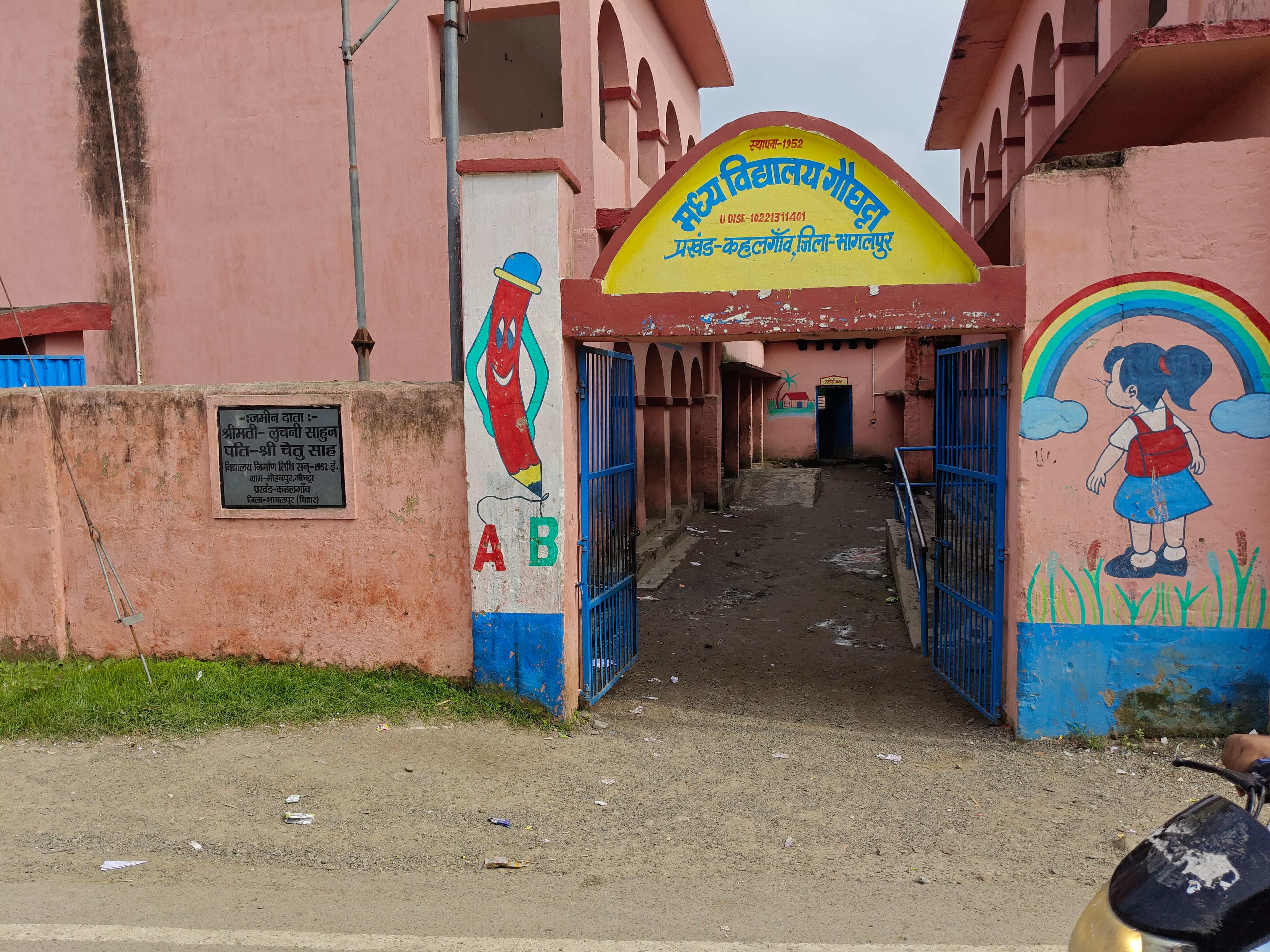
The school in Mohanpur Gaughatta
And the cost of that is borne by them as they buy packaged drinking water from private retailers–a Rs 20 litre jar costs them between Rs 10-Rs 20. They have no alternative as the groundwater is induced with arsenic contaminants–and almost majority of the 100 households in this part of the panchayat buy the packaged water.
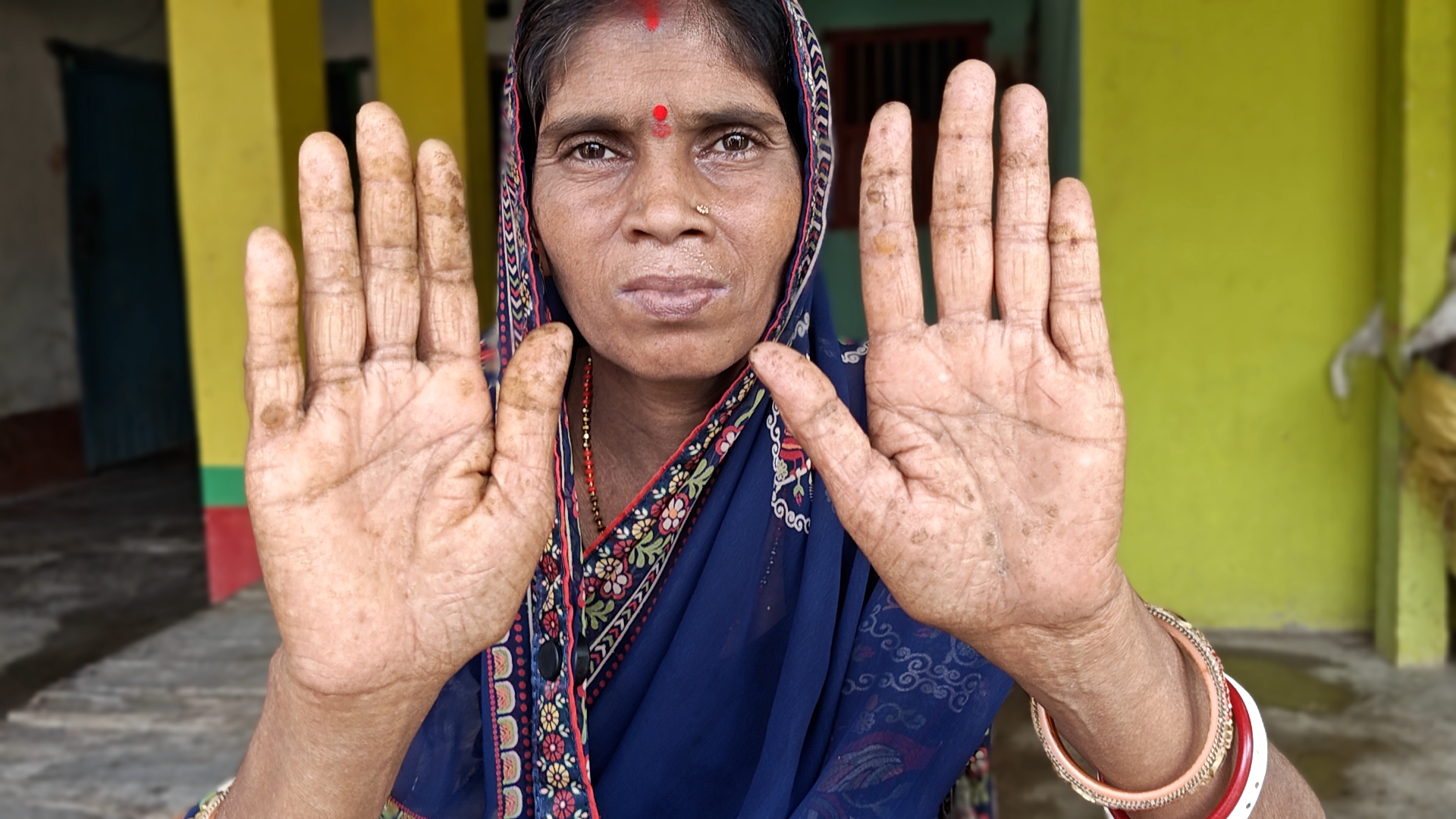
However, the remnants of the past chronic exposure to the water has left them struggling with diseases. At least five of the Reporters Desk spoke to had their skin itching since last 10 years, and sometimes even gastrointestinal issues.
On a weekday, in the courtyard of one family–who lost their three members in the last one year–Pinki Devi sat resigned with a grim face. Currently in her early 40s, she arrived in Naya Tola after marriage in 2005.
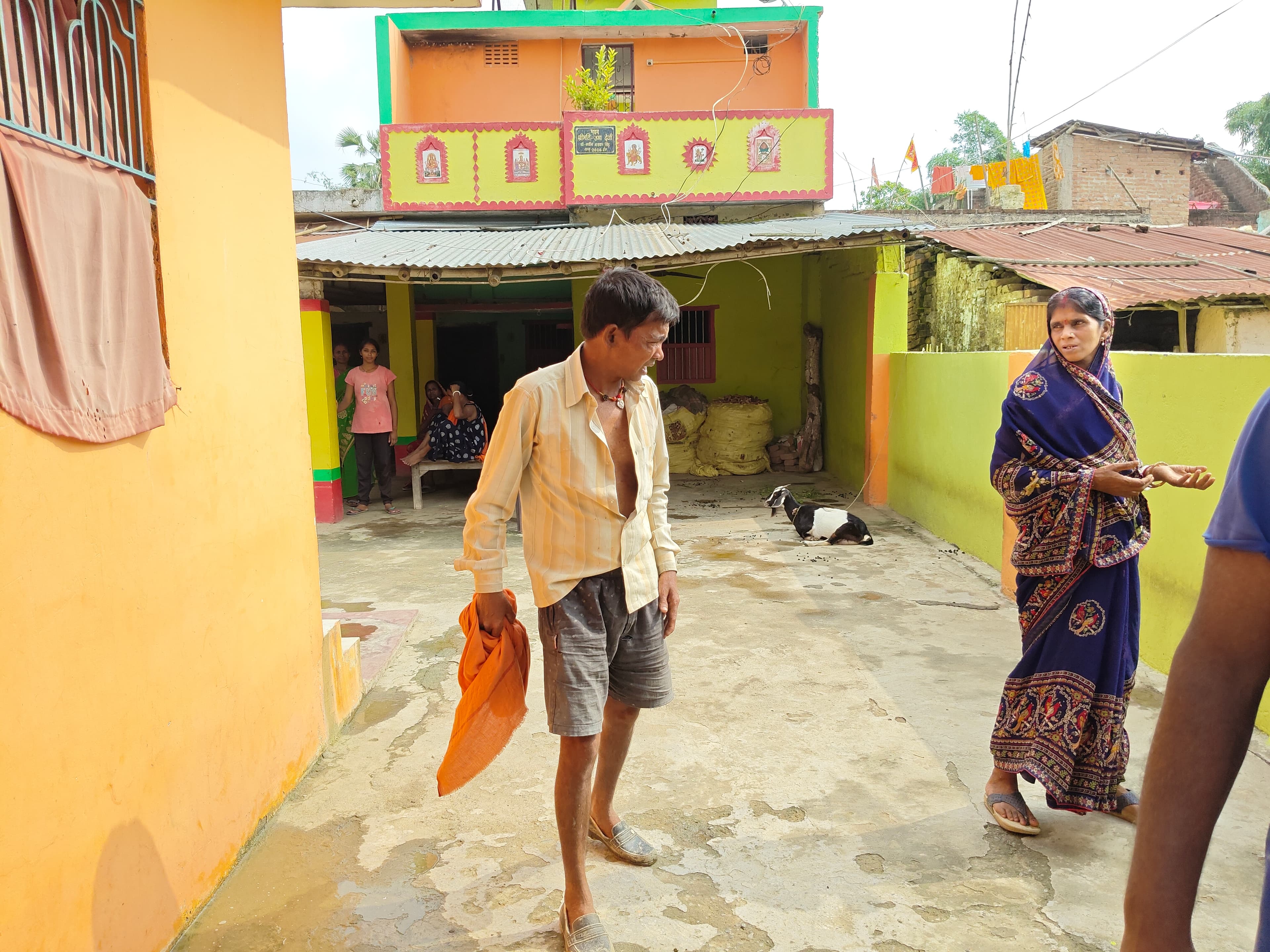
The husband has more problems than her wife
She outrightly complained that there was a marked difference between the quality of water she consumed. Slowly, the skin on her hands started to itch, then the itch went on to her legs and then the body. “Now we buy the water jar, and I also use the water to even cook,” she says. She has a brief argument with other people emphasising that she indeed uses the jar water for her cooking. “Now the skin problem [Keratosis] of my palm has reduced. However, sometimes I face severe itching.”
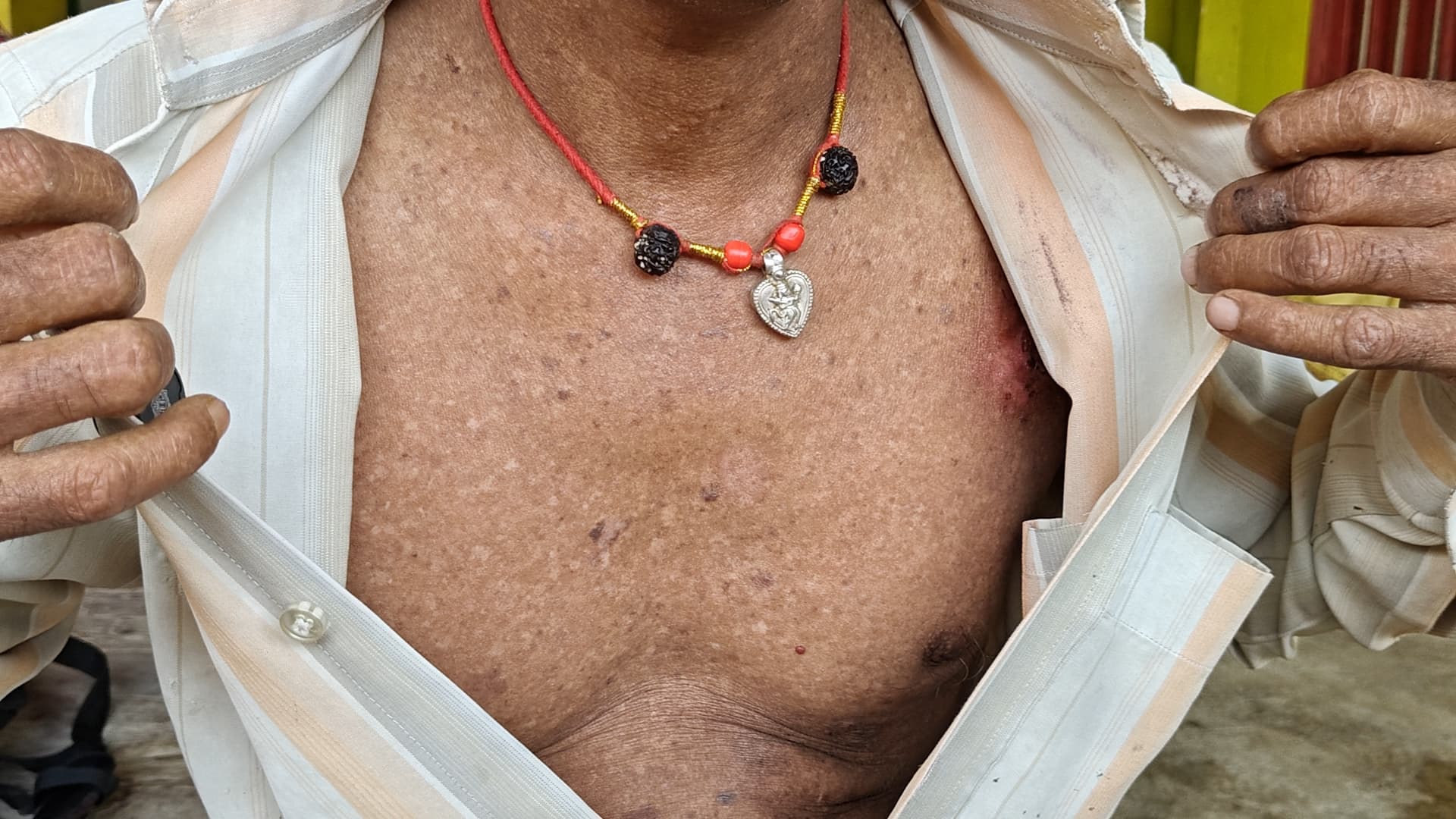
Melanosis due to prolonged arsenic exposure
Her husband, a daily wage worker, who is sitting beside her has been facing the brunt since early 2010. In 2014, a medical prescription of a homeopathic doctor stated: “...Heart palpitation at night. Weakness, cramping in the whole body. Insomnia, chest pain, loss of appetite, nervousness.” In 2019, an endoscopy report from a hospital said that there was a ‘healing duodenum ulcer’. Mandal told Reporters Desk: “Now that I drink jar water, my gastritis is controlled, however, I have itching in my legs and hands. Sometimes I have chest pain at night.”
When asked why the people have not demanded access to water, another resident and a daily wage worker Dasrath Mandal told: “I had gone to meet the block and met the officials who told that they have not received their salaries, without which they are unable to do any work.”
The villagers have no choice but to wait
In her late 20s Jyoti Kumari, who is on a visit to her home from her in-laws place, says that she lost three family members in the span of one year. She had been quietly watching the conversation, and she quipped: “The same marks–melanosis, keratosis–were on the bodies of my father, uncle, and my mother. My father was diagnosed with cancer and had a few chemotherapy sessions, and my uncle too had cancer, but he was treated elsewhere. My mother was also ill, but she did not have cancer. They all passed away in a short span of time,” she says.
Her appearance hides her grief, but her family’s relationship with drinking water is yet to seep in.
Maybe, in this part of India, this is the reality.
Comments